LOADING

Vinny · The book
“One second. Counting the house money.”
“One second. Counting the house money.”
The spread isn't about who wins. It's about who covers. Most people mix these up forever.
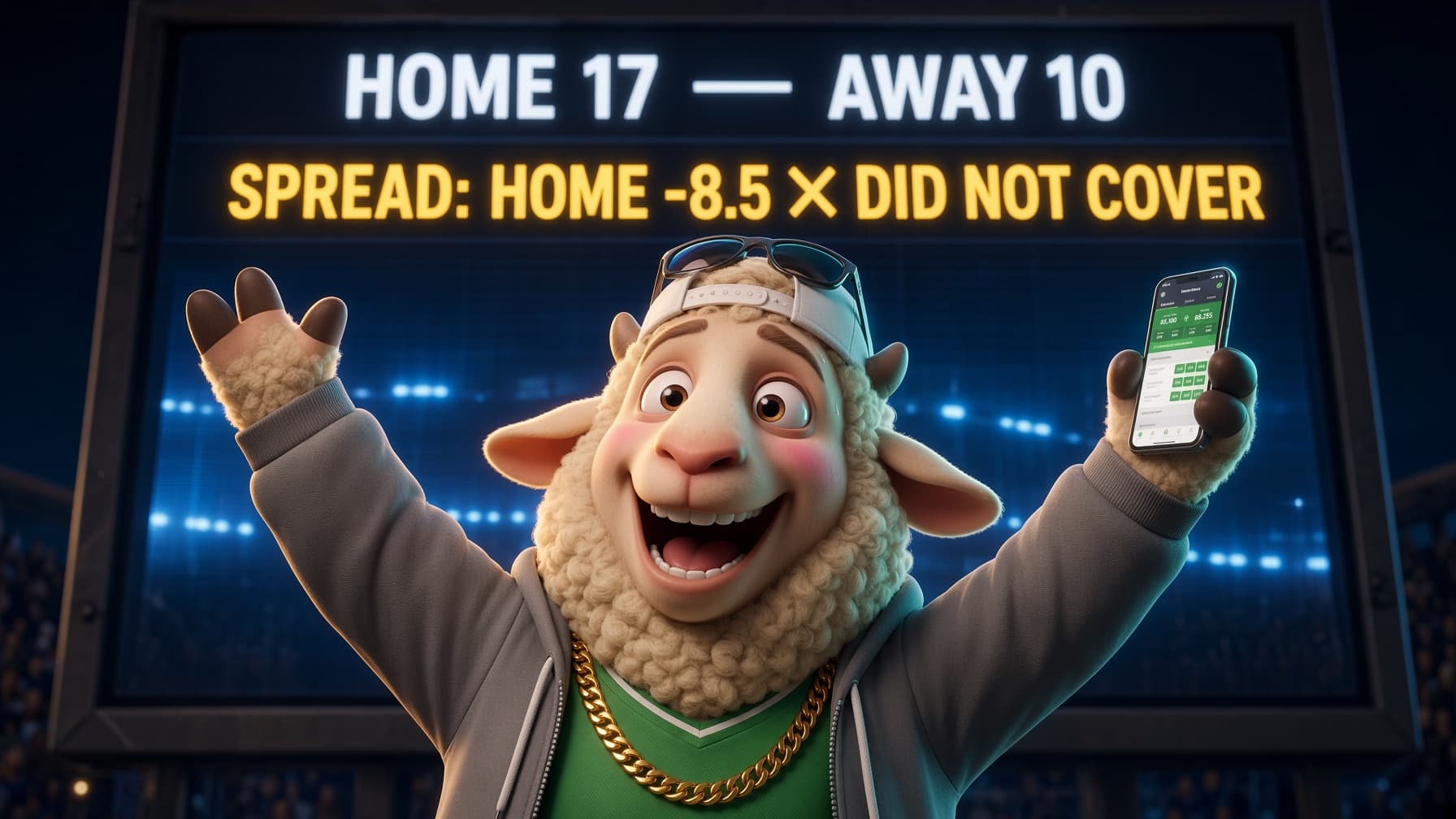
The spread is a margin-of-victory handicap that turns a lopsided game into a roughly 50/50 bet. A favorite at -7.5 must win by 8 or more to cover; an underdog at +7.5 can lose by 7 and still cash. Winning the game and covering the spread are two different outcomes.
The spread is my single greatest invention, and I stole it from a math teacher in 1940.
Without the spread, you could only bet on the winner — and obvious favorites would drain my payout on every big game. The spread makes every game a coin flip on my board. Chiefs -7.5 versus a bad team? Instead of -500 moneyline juice, I've got -110 on both sides. I get action from both camps. I balance the book. I collect vig regardless of who wins.
The spread also does something beautiful: it makes you bet against the score margin instead of the outcome. Most people never think about margin. They just think about winning. That's the gap I live in.
Okay I'm going to admit something embarrassing. In my first year of betting, I thought covering the spread meant winning the game. Like I thought "cover" was just another word for win.
I bet the Chiefs -7.5 because I thought they'd destroy whoever they were playing. They won 17-13. I lost. I called my buddy to complain that the Chiefs somehow lost even though they won, and he just... went quiet. Then he explained it to me like I was six years old. I'm 34.
The spread is a handicap set by the book to make both sides of a bet equally attractive to the betting public.
Example: Chiefs -7.5 vs. Raiders +7.5. Bet Chiefs -7.5: KC must win by 8 or more. Bet Raiders +7.5: LV can lose by up to 7 and you still win. The book's goal is equal money on both sides — they collect vig either way.
Where the value is: sometimes the public hammers one side so hard the book moves the line off fair value. Chiefs go from -7.5 to -9. Now the Raiders at +9 may be the right bet — not because the Raiders are good, but because the price moved past fair value. Covering the spread and winning the game are two completely different things.
Covering means beating the handicap, not just winning. A team at -7.5 covers only if it wins by 8 or more; a team at +7.5 covers if it wins outright or loses by 7 or fewer.
The minus sign marks the favorite and the points it must give up (-7.5). The plus sign marks the underdog and the head start it receives (+7.5).
The spread attracts roughly equal money on both sides of a mismatch, letting the book collect its vig no matter who wins instead of paying out on obvious favorites.